

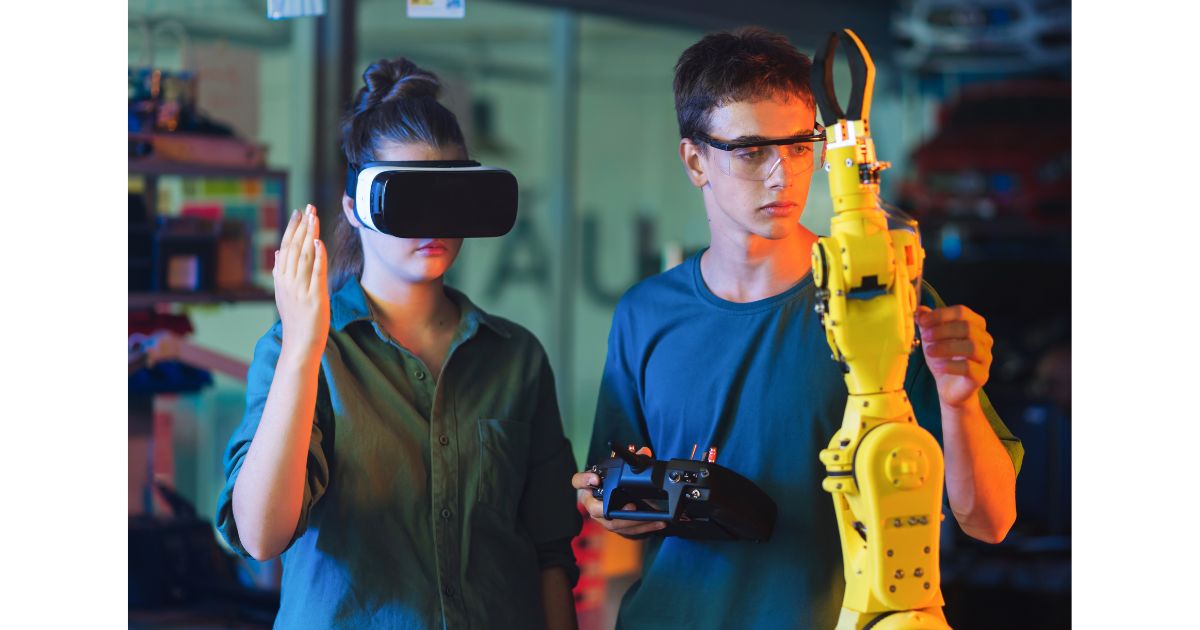
In 2026, entrepreneurship is deeply connected with rapid technological evolution. Startups and established businesses are no longer competing only on products or services—they are competing on how effectively they adopt and integrate new technologies. Entrepreneurs who understand and apply the latest technology trends of 2026 are gaining a strong advantage in innovation, efficiency, and global reach.
This article explores the must-know latest technology trends 2026 for entrepreneurs that are reshaping industries and creating new business opportunities.
1. Artificial Intelligence as a Business Partner
Artificial Intelligence has moved beyond being a simple tool—it is now a business partner. Entrepreneurs are using AI to analyze markets, predict customer behavior, automate customer support, and even generate business strategies.
AI-powered systems help startups reduce costs and make faster decisions. In 2026, businesses that ignore AI risk falling behind competitors who rely on intelligent automation for growth.
2. Generative AI for Business Creation
Generative AI is transforming how entrepreneurs build and scale businesses. It can create marketing content, product designs, business plans, and even software prototypes in minutes.
For startups with limited resources, this trend is a game-changer. Entrepreneurs can now launch ideas faster, test them in the market quickly, and refine them based on AI-generated insights.
3. AI-Driven Automation in Startups
Automation is no longer just about manufacturing—it is now deeply embedded in digital businesses. Entrepreneurs are using AI-driven automation for:
- Customer service chat systems
- Email marketing campaigns
- Financial management
- Inventory tracking
This reduces human workload and increases productivity, allowing founders to focus on strategic growth.
4. Cloud-Native Businesses
Cloud computing has become the backbone of modern entrepreneurship. In 2026, more startups are being built entirely on cloud platforms.
Cloud-native businesses benefit from scalability, reduced infrastructure costs, and global accessibility. Entrepreneurs can launch businesses without investing heavily in physical servers or IT infrastructure.
5. Blockchain for Transparent Business Models
Blockchain technology is helping entrepreneurs build trust-based systems. It is widely used for:
- Secure transactions
- Smart contracts
- Transparent supply chains
- Digital identity verification
This technology is especially useful for startups in finance, logistics, and e-commerce, where trust and transparency are critical.
6. The Rise of Digital-First Startups in the Metaverse
The metaverse is creating new opportunities for entrepreneurs to build digital-first businesses. Virtual stores, digital events, and immersive brand experiences are becoming common.
Entrepreneurs are now launching businesses that exist entirely in virtual environments, reducing physical overhead costs while reaching global audiences.
7. Data-Driven Decision Making
Data has become one of the most valuable assets for entrepreneurs. In 2026, businesses rely heavily on real-time analytics to make decisions.
Entrepreneurs use data to understand customer needs, track performance, and improve marketing strategies. Data-driven decision-making reduces risks and increases business success rates.
8. Cybersecurity as a Priority Investment
With increasing digital threats, cybersecurity is a top concern for entrepreneurs. Startups are investing in advanced security systems powered by AI to detect and prevent cyberattacks.
Protecting customer data and business information is essential for maintaining trust and avoiding financial losses.
9. Internet of Things (IoT) for Smart Business Operations
IoT is helping entrepreneurs create smarter and more efficient business systems. From smart warehouses to connected retail systems, IoT enables real-time tracking and automation.
For example, retail entrepreneurs can monitor inventory automatically, while logistics startups can track deliveries in real time.
10. Remote Work Technology Evolution
Remote work continues to grow in 2026, supported by advanced collaboration tools, virtual offices, and AI-powered communication platforms.
Entrepreneurs are building fully remote teams, reducing office costs while accessing global talent. This trend has made startups more flexible and scalable.
11. Sustainable and Green Technology Businesses
Sustainability is becoming a key factor in entrepreneurship. Consumers are demanding eco-friendly products and services, and startups are responding with green technologies.
Entrepreneurs are investing in renewable energy, sustainable packaging, and carbon-reduction solutions to align with global environmental goals.
12. Robotics in Small and Medium Businesses
Robotics is no longer limited to large industries. In 2026, small businesses are also using robotics for tasks such as packaging, cleaning, and customer interaction.
This trend helps entrepreneurs reduce operational costs and improve efficiency.
13. Voice and Conversational AI Interfaces
Voice technology is becoming a major part of customer interaction. Entrepreneurs are integrating voice assistants and conversational AI into apps, websites, and customer support systems.
This improves user experience and makes business interactions faster and more natural.
14. Personalized Customer Experience Through AI
Personalization is a powerful trend in entrepreneurship. AI helps businesses understand customer preferences and deliver customized experiences.
From personalized product recommendations to targeted marketing, entrepreneurs are using AI to increase customer satisfaction and loyalty.
15. Low-Code and No-Code Development Platforms
In 2026, entrepreneurs no longer need advanced coding skills to build digital products. Low-code and no-code platforms allow users to create websites, apps, and software quickly.
This democratization of technology is enabling more people to become entrepreneurs with minimal technical barriers.
16. Digital Payments and Fintech Expansion
Digital payment systems and fintech innovations are making transactions faster and more secure. Entrepreneurs are adopting mobile wallets, digital banking, and contactless payments to serve customers efficiently.
This trend is especially important for e-commerce and service-based startups.
Conclusion
The must-know latest technology trends 2026 for entrepreneurs highlight a powerful shift toward automation, intelligence, and digital transformation. Entrepreneurs who embrace these technologies are better positioned to scale faster, reduce costs, and compete globally.
From AI and blockchain to IoT and sustainable innovation, these trends are not optional—they are essential for modern business success. The future belongs to entrepreneurs who adapt quickly, think digitally, and leverage technology to solve real-world problems.